
Bill Gates was the richest person on earth for 18 years. When his foundation’s trust makes two new investments in the same quarter, both worth hundreds of millions, it is worth paying attention to what those bets are saying about the economy.
In the last article, I covered the Home Depot position. This one is more interesting.
The Bill and Melinda Gates Foundation Trust bought 1.19 million shares in FedEx Freight Holding (FDXF) for approximately $180 million, according to the Q2 2026 13F filing.
The fund’s total 13F portfolio is $34.42 billion, with top holdings in Berkshire Hathaway (BRK.B), Caterpillar (CAT), Canadian National Railway (CNI), and Waste Management (WM), as reported by WhaleWisdom.
What makes this particular purchase notable is the timing. FedEx Freight only became an independently traded public company on June 1, 2026, FedEx Freight reports.
Gates’s trust opened this position essentially at birth, within weeks of the spinoff’s completion. FDXF trades near $135.73 as of writing. The new position meets a FedEx share position worth $746.6 million, according to the same 13F filing.
What FedEx Freight actually is, and why it matters
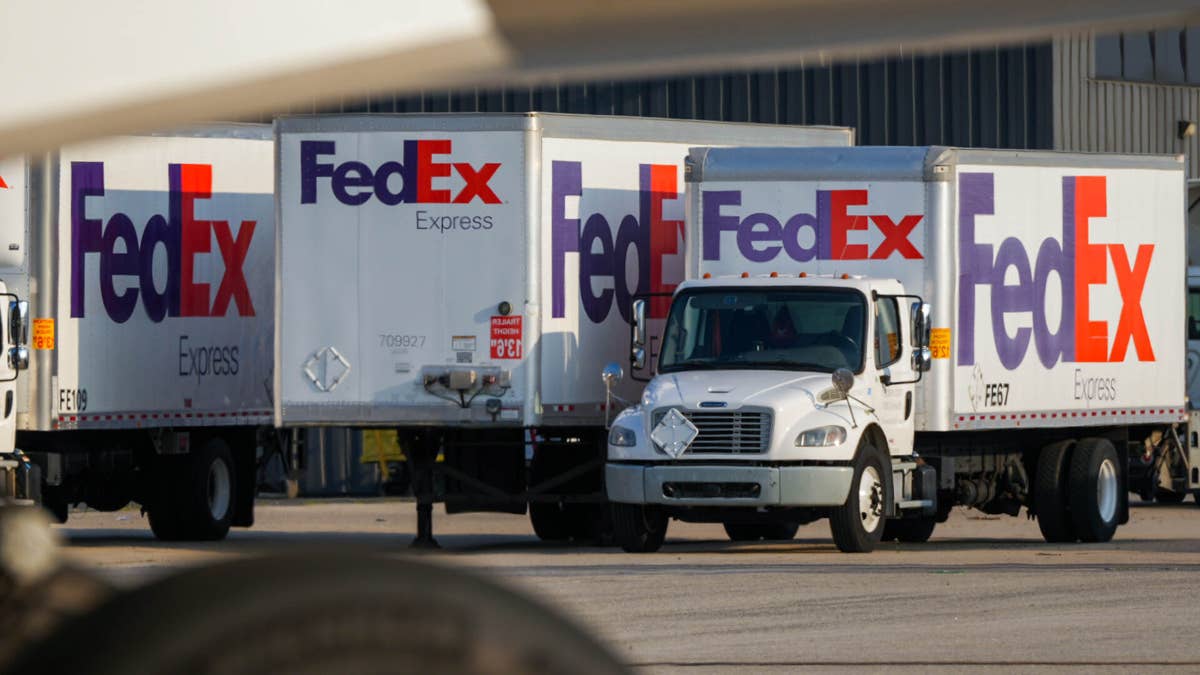
FedEx Freight is not what most people picture when they think “FedEx.” These are not packages on your doorstep. This is heavy freight of pallets, commercial shipments, and industrial goods moving across the country in what is called less-than-truckload, or LTL shipping.
The numbers on the network are substantial. Nearly 30,000 vehicles, roughly 17,000 tractors, 40,000 team members, and more than 365 locations across all 50 U.S. states, Canada, Mexico, Puerto Rico, and the U.S. Virgin Islands, according to FedEx Freight.
More Economy:
- Kevin O’Leary raises stark concern about inflation
- Goldman Sachs delivers its verdict on inflation and jobs
- Bank of America issues stark warning on Fed and economy
FedEx Freight is North America’s largest LTL carrier. Not the second largest, not a major player. The largest.
When manufacturers ship goods to distributors, when distributors ship to retailers, when commercial freight moves through the American economy, much of it moves through networks exactly like this one. That is what my “backbone” thesis means in practice.
FedEx announced its intent to spin off FedEx Freight in December 2024. The separation was completed on June 1, 2026, giving the business its own management team, own capital allocation decisions, and own stock.
The spinoff dynamic Jim Cramer explained and why it creates an opportunity
Jim Cramer talked about this exact situation on CNBC’s Mad Money in July, and his framing was sharp. When a company spins off a subsidiary, every existing shareholder suddenly holds stock in the new entity, whether they want it or not.
Many of them do not know what it is and sell it. “You just say, ‘Oh, I don’t need this little thing,’ and you throw it away,” Cramer said in a Yahoo Finance report. “It causes a temporary beatdown.”
Related: Jim Cramer drops stunning take on the economy
That mechanical selling pressure, disconnected from fundamentals, is precisely the kind of mispricing that long-term investors like Gates’s team look for.
The first earnings report added confusion: no earnings per share (EPS) figure because the company was in a transition period, changing its fiscal year, plus limited standalone guidance that Cramer described generously as “quirky.”
But Cramer‘s long-term thesis was simpler than the optics.
“FedEx Freight is instantly the largest player in the less-than-truckload market, which is an attractive one as the freight business comes out of a multi-year bear market with much less capacity. I want to own this one for the long haul.”
Gates’s trust appears to agree.
The financial reality and what Goldman Sachs sees from here
The most recent reported results, for Q4 fiscal 2026, compared to the prior year, showed:
- Revenue of $2.4 billion, up 4.8% year over year (YOY)
- Revenue per shipment of $415.22, up 11.5% YOY
- Adjusted operating income was $363 million, a 23.9% decrease YOY
- Full-year fiscal 2026 revenue was $8.8 billion, a 1.1% decrease YOY
Adjusted operating margin of 12.6% is the baseline Goldman Sachs is modeling toward an 85% operating ratio, or approximately 15%, over the medium term, according to an Investing.com report.
Goldman initiated coverage on FedEx Freight with a Buy rating and a $186 price target on the first day of trading, according to the same report.
The firm forecasts annual revenue growth of 4% to 6% through 2029, with EPS rising from $4.65 in fiscal 2027 to $6.95 by 2029.
Related: FedEx closes more U.S. locations as it changes how packages move
The path to improvement includes higher pricing on contract renewals now negotiated independently rather than bundled under FedEx’s umbrella, greater exposure to small and medium-sized businesses (SMBs), healthcare, grocery, and data center logistics, and productivity initiatives under dedicated management with no competing priorities inside a larger conglomerate.
At the current $135.73, FDXF trades at 26.45 times forward earnings and 2.32 times sales, according to Yahoo Finance, suggesting investors are already paying a premium for the company’s future growth.
Still, Goldman Sachs sees considerably more room to run, with its $186 price target implying roughly 37% upside from current levels.
That’s what makes this one interesting to me. The market saw selling pressure; the Gates Foundation saw an opportunity. We won’t know whether the bet pays off for years, but sometimes the most revealing trades are the quiet ones made when everyone else is looking the other way.
Related: JPMorgan resets FedEx stock rating ahead of June spinoff