Author

admin

Browsing

The Justice Department’s endeavor to break up Live Nation, Ticketmaster’s parent company, has officially made its way to the courtroom.

The antitrust case, which began with jury selection Monday, is unfolding in federal court in New York. Opening statements are scheduled to start Tuesday, with the trial expected to last six weeks.

The lawsuit, filed in 2024 by the Justice Department and dozens of state attorneys general, as well as Washington, D.C., alleges that Live Nation has illegally dominated the live concert industry by monopolizing ticketing, concert booking, venues and promotions.

The complaint, which was filed in the Southern District of New York, accuses the company of engaging in ‘anticompetitive conduct’ that leads fans to pay more in fees, artists to get fewer opportunities to play concerts and venues to have limited choices for ticketing services.

Ticketmaster has for years been the target of scrutiny by music fans who reported frustrations with buying tickets through the platform.

Live Nation directly manages more than 400 musical artists and owns or controls more than 265 concert venues in North America. And through Ticketmaster, the lawsuit says, it controls around 80% of major concert venues’ ticketing — as well as a growing share of the resale market.

“Through interconnected agreements associated with Live Nation’s various roles as ticketer, promoter, artist manager, and venue owner,” the complaint says, “Live Nation has created a feedback loop that pushes ticketing and ancillary fees higher while allowing Live Nation to be on all sides of numerous transactions and thereby double-dip from the pockets of fans, artists, and venues.”

Here’s what else to know.

Attempts to advocate for ticketing reform have spanned decades. The rock band Pearl Jam tried to push the issue forward 30 years ago when its members testified before Congress, saying Ticketmaster had refused to agree to low concert ticket prices and fees. The case was dismissed a year later, and Ticketmaster’s dominance has persisted over the decades that followed.

But frustration over Ticketmaster began to boil over when it incurred the wrath of one of the country’s largest fan bases: Swifties, aka followers of Taylor Swift.

In late 2022, overloaded presale queues for the domestic leg of Swift’s 2023 Eras Tour caused the site to crash and led Ticketmaster to cancel the sale. The fiasco even drew the attention of Swift herself, who called it “excruciating” to watch.

Soon afterward, in January 2023, the Senate Judiciary Committee held a hearing examining Ticketmaster’s dominance in the industry. During the bipartisan hearing, which probed whether Ticketmaster’s outsize control has unfairly hurt customers, even senators couldn’t refrain from making references to Swift.

The Swifties also brought their own lawsuits against Ticketmaster in December 2022. One class-action suit was dropped by the end of 2023, while another suit, filed together by 355 individual ticket buyers, still awaits trial.

Live Nation Entertainment has denied that it’s a monopoly.

The company has told NBC News that the Justice Department’s lawsuit “won’t solve the issues fans care about relating to ticket prices, service fees, and access to in-demand shows.”

“Calling Ticketmaster a monopoly may be a PR win for the DOJ in the short term, but it will lose in court because it ignores the basic economics of live entertainment, such as the fact that the bulk of service fees go to venues, and that competition has steadily eroded Ticketmaster’s market share and profit margin,” the company said.

Last week, Live Nation asked U.S. District Judge Arun Subramanian to pause the case so it could appeal his decision denying the case’s dismissal.

Subramanian, who was appointed by President Joe Biden, declined to delay the trial and ruled to allow the Justice Department’s claims to proceed.

Potential witnesses for the trial include: musician Kid Rock (whose real name is Robert Ritchie), Minnesota Timberwolves CEO Matthew Caldwell, Roc Nation CEO Desiree Perez, Live Nation Entertainment CEO Michael Rapino and Mumford & Sons keyboardist Ben Lovett.

Kid Rock is expected to testify about ‘competitive conditions for concert promotions and primary ticketing, including the impact of Defendants’ actions on artists and fans,’ according to the potential witness list provided by the plaintiffs’ attorneys. In January, he told the Senate Commerce Committee at a hearing that the ticketing industry is ‘full of greedy snakes and scoundrels.’ (It appears Kid Rock is still partnering with Live Nation for his “Freedom 250” tour, with tickets currently being sold exclusively through the platform.)

Lovett’s testimony, meanwhile, would be likely to address ‘artist preferences and competitive dynamics associated with the promotions and amphitheaters markets,’ according to the plaintiffs’ potential witness list document. He’s also listed on the defendants’ potential witness list document.

Live Nation CEO Michael Rapino and former Ticketmaster CEO Irving Azoff are also expected to take the stand. They were instrumental figures in the 2010 merger.

Azoff, who represents major artists such as Harry Styles, is ‘likely to testify about industry trends, dynamics, and competition, the selection of live event promotion companies, and tour and show routing and venue selection, as well as ticketing provider preferences,’ according to the potential witness list provided by the defendants’ attorneys.

Rapino’s expected testimony would focus on ‘the company’s business, its corporate structure, strategy, and finances, including the different lines of business and how they interact, as well as industry trends, dynamics, and competition.’ The defendants’ attorneys also said he would be likely to ‘rebut the plaintiff’s allegations of misconduct and anticompetitive effects.’

Last year, the Federal Trade Commission separately sued Live Nation and Ticketmaster over allegations of illegal and deceptive business practices that it says caused consumers to pay ‘significantly more’ than the face value of a ticket.

Seven states — Colorado, Florida, Illinois, Nebraska, Tennessee, Utah and Virginia — joined the FTC’s suit, which was filed in U.S. District Court for the Central District of California.

This post appeared first on NBC NEWS

As Americans are stranded in the Middle East amid the U.S. and Israel war with Iran, government and private agencies are working around the clock to conduct evacuations.

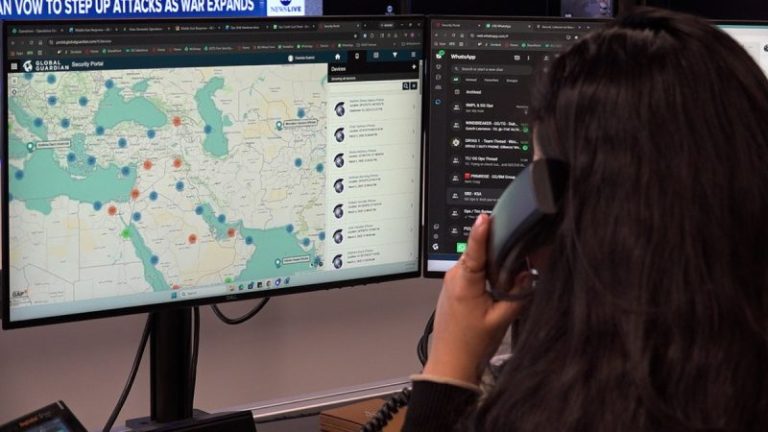
In addition to the U.S. Department of State’s 24/7 task force aimed at evacuating Americans, private security firm Global Guardian is also working around the clock to complete the same mission.

As of Friday, Global Guardian has evacuated more than 4,000 people from the Middle East, according to its CEO and President, Dale Robert Buckner.

While operations and logistics teams sit in an office building in northern Virginia, the firm has personnel in more than 140 countries, allowing Global Guardian access to nearly every corner of the world for emergency response or evacuations.

‘We provide medical evac services, we provide kidnap, ransom, extortion negotiation payment if someone is kidnapped or extorted,’ Buckner said. ‘We’re providing about 300 missions a month of executive protection travel, in about 84 countries a month.’

The private security firm also conducts camera surveillance of residences and commercial property and has cyber analysts monitoring mobile devices. 

After the U.S. and Israel struck Iran in a joint attack last weekend, the firm has been coordinating multiple emergency response evacuations — but this isn’t the first time it has assisted Americans out of a crisis zone.

‘That means getting people out of Puerto Vallarta a week ago, and Jalisco, Mexico. That means getting people out of Asheville, North Carolina when it got wiped out by a hurricane,’ Buckner said. 

Logistically, getting tourists out of a war zone and back to safety is a process, but the firm works fast, completing their first border crossing within the first six hours of the missile strikes.

Immediately, the firm received a call from a pair of students studying abroad, Deputy Vice President of Operations Colin O’Brien told Fox News. He said they were trying to leave Dubai.

‘Within about four and a half hours from the phone call, we had our teams in motion to go pick these people up and it was two college-aged women,’ said O’Brien.

‘Put them in the car, we were then able to move from the Omani border and by eight hours we were at the border. Work through the border checkpoint to a hotel in Muscat, where we could stop and give them a short rest while we arrange their transportation home,’ he says. 

The group said it remains active year-round to ensure evacuation plans are in place before disasters strike.

‘There’s a narrative of, here’s the pickup point, here’s the key crossing site,’ Buckner said. ‘This is what you’re gonna need from a paperwork standpoint, legally. And then we’re gonna put you in a hotel or straight onto a commercial flight. Most likely, at this point in the war, we’re gonna put you on a private charter.’

Buckner said most of these missions happening in the region are ground movement, done by locals. He says in the 140 countries the firm is in, they have ground teams working year-round. Consistently training year-round. 

‘We’re communicating, we’re coordinating, we’re executing. Executive protection agents, armed agents, armed vehicles, large-scale event support with medical and security personnel,’ he said, describing the firm’s standard operating capabilities.

‘We’re coordinating whether the firm needs drivers. From Dubai to Oman, Israel to either Oman, Jordan or Egypt. Out of Bahrain into Saudi Arabia,’ Buckner said.

While the firm is coordinating with the State Department, it said it has not yet conducted a flight mission on behalf of the department.

Global Guardian offers these services through what it calls a ‘Duty of Care Membership,’ which Buckner said costs $15,000 per year for a family of five.

‘You are going to sign a contract — whether it’s a family, a family office or typically a large corporate logo. Then we become, at your beck and call,’ Buckner said, describing the emergency response services included in the agreement.

For Americans currently stuck in the Middle East, Buckner said the cost of evacuation using ground and air resources varies depending on the situation and location.

Related Article

Trump says defense giants will quadruple production of ‘exquisite class’ weapons after White House meeting
This post appeared first on FOX NEWS

President Donald Trump’s latest push to slash prescription drug prices promises relief at the pharmacy counter, but behind the headline savings lie trade-offs that could reshape how drugs are developed, priced and delivered in the United States.

To deliver on that promise, the administration has rolled out TrumpRx, a federal price-comparison platform aimed at lowering out-of-pocket costs. The effort unfolds against the backdrop of the midterm election cycle, where rising healthcare costs remain a central concern for voters and a defining campaign issue.

The political appeal is clear, but experts warn the economics are messier. Economists point to a basic trade-off: lower prices today can shape how and whether new drugs are developed tomorrow.

‘When drug prices are capped or negotiated down, companies anticipate lower returns, reducing investment in drug research and development,’ said Olivia Mitchell, a professor of business economics and public policy at the Wharton School.

‘Economic evidence shows that lower prices depress incentives to develop new drugs,’ she added. 

‘In the short term, patients and payers can see meaningful savings through lower prices and out-of-pocket costs, but in the longer term, there is more risk of fewer or slower-arriving new medicines, especially in areas most exposed to price controls.’

Michael Baker, director of healthcare policy at the American Action Forum, said government price setting does not eliminate costs so much as redistribute them.

‘At the most basic level, government price setting only limits what patients pay for a drug — usually reflected in an out-of-pocket or co-insurance payment,’ Baker said. ‘This does nothing to address the overall cost of the drug, which someone still has to pay, nor does it lower the cost associated with development.’

As a result, he said, those costs could reemerge through tighter health coverage rules, fewer treatment options or reduced future innovation.

Supporters of the administration counter that the policy does not amount to strict government price caps. Instead, they describe it as a negotiated arrangement.

Ed Haislmaier of the Heritage Foundation said companies appear to be lowering prices in exchange for expanded market access or other relief, a structure he argues avoids the most disruptive effects of traditional price controls.

‘In such cases, companies are likely calculating that revenue losses from lower prices will be offset by revenue gains from more sales,’ Haislmaier told Fox News Digital. 

‘The kind of government price controls that are most damaging to innovation are ones that limit the initial price a company can charge for a new product. That is the situation in some countries, but fortunately not yet in the United States,’ he added.

For patients squeezed by rising costs, the promise of immediate savings is hard to dismiss. 

But economists say the long run question is whether the system can deliver cheaper drugs without dulling the incentives that produce the next generation of treatments —an issue both parties are likely to keep pressing as health costs stay front and center.

This post appeared first on FOX NEWS

Lawmakers on Capitol Hill could soon add another priority to their growing agenda as Republicans work to navigate a partial government shutdown and other deadlines looming in the next several weeks — weighing whether to provide additional cash to fund President Donald Trump’s operation in Iran.

Early chatter is beginning in the House of Representatives over a potential supplemental funding bill to aid the U.S. and Israel’s joint strikes on Iran, depending on how long the operation lasts and how much both countries bear down on the Islamic Republic.

House Appropriations Committee Chairman Tom Cole, R-Okla., told reporters last week that he would ‘expect’ a supplemental funding request from the Department of War ‘well before the end of the year.’

‘We’ve been told the Pentagon is looking at it, but we haven’t been given anything about an amount or time frame yet,’ Cole said.

Asked by Fox News Digital about what kind of price tag he would expect, Cole speculated, ‘Maintaining two carrier battle groups in action is not a cheap thing, not to mention all the other resources that are being expended. So I would expect it to be very robust.’

‘It’s been a pretty frequent part of conversation,’ House Foreign Affairs Committee Chairman Brian Mast, R-Fla., told Fox News Digital of an Iran funding bill.

House Homeland Security Committee Chairman Andrew Garbarino, R-N.Y., also told Fox News Digital he would ‘absolutely’ back a defense supplemental funding bill.

A senior member of the House Appropriations Committee, who was granted anonymity to speak freely, said they envisioned a modest increase in funding for Iran but said there were multiple variables at work that made a total cost unknowable at this point.

‘It depends on how long it lasts,’ they said. ‘A lot of this depends on, do our Gulf Coast partners participate? If they do, that helps. It depends on how long Israel goes. But we’ll definitely need some more munitions, so I’d say a small supplemental is probably important to just restock.’

But it will likely be difficult to sell the need for more Iran funding to House Democrats, many of whom have argued Trump’s involvement has amounted to an illegal war.

‘We’ll cross that bridge when we get to it in terms of if the administration makes a request to Congress to consider additional funding,’ House Minority Leader Hakeem Jeffries, D-N.Y., told NBC’s ‘Meet The Press’ on Sunday. ‘But at this particular point in time, the administration has failed to make its case as to the rationale or justification for this war of choice in the Middle East.’

And with the House GOP’s razor-thin majority, which is expected to grow to two votes after a special election in Georgia this week, Republican leaders could have a tough time appeasing fiscal hawks in their own party.

‘We need to know what the terms of the conflict are going to be, how long — a lot of us are very happy with going after and taking out Iran’s capabilities and taking out a lot of their bad guys, but what’s the endgame?’ Rep. Chip Roy, R-Texas, said to Fox News Digital.

‘Number two, is it paid for? So, you know, general support for what we’re doing to go after the bad guys, but we’ve got to know what the limits are and how much it’s gonna cost, and if it’s paid for.’

Even if it passes the House, such legislation would need 60 votes to advance in the Senate, meaning at least several Democrats would need to be on board. 

Fox News Digital reached out to the Department of War for additional comment.

This post appeared first on FOX NEWS

Skyharbour Resources Ltd. (TSX-V:SYH)  (OTCQX:SYHBF) (Frankfurt:SC1P) (‘Skyharbour’, ‘SYH’ or the ‘Company’) is pleased to announce that its joint venture partner, Denison Mines Corp. (‘Denison’) (TSX:DML) (NYSE American: DNN), has commenced the 2026 winter exploration program at the newly formed Wheeler North Joint Venture, formerly part of the Russell Lake  property in the eastern Athabasca Basin of northern Saskatchewan. This winter phase of work will consist of approximately 2,500 metres of diamond drilling at the Fox Lake Trail (‘FLT’) target and represents the first phase of a planned 7,500 metre drill campaign in 2026 across the high-priority FLT, Fork and Sphinx target areas. The 2026 drilling at Wheeler North is operated and fully funded by Denison pursuant to the strategic joint venture agreement announced on November 17th, 2025 (‘Denison Transaction’).

Russell Lake Property Area Location Map:
https://www.skyharbourltd.com/_resources/images/SKY_RussellLake.jpg

An additional 5,000 metres of drilling at the Wheeler North property’s Fork and Sphinx target areas is planned for later in the year, intending to follow up on drilling from the last few years which discovered prospective structures and uranium mineralization at these targets.

Reorganization of the Russell Lake Property:
https://www.skyharbourltd.com/_resources/images/Russell-Map-New.jpg

As part of the Denison Transaction the Russell Lake property was reorganized into four joint ventures:  Wheeler North, Getty East, Russell Lake or RL, and the Wheeler River Inliers. Each of these are strategically located in the central portion of the eastern Athabasca Basin of northern Saskatchewan, to the east of Denison’s flagship Wheeler River project, and with access to significant regional infrastructure, including an exploration camp, provincial highways, and the provincial power grid. In total, more than 15,000 metres of diamond drilling are planned in 2026 across the newly formed joint ventures.

Wheeler North Property Exploration Plans:

Wheeler North comprises 16,409 hectares over eight claims located immediately adjacent to Denison’s Wheeler River Project and hosts multiple high-priority drill targets along prospective conductive corridors. Ownership at the property is currently 51% Skyharbour and 49% Denison, with Denison serving as operator and holding earn-in rights to increase its interest to up to 70% in two phases. To reach 60%, Denison must complete CAD $10 million in exploration within 48 months (including $2.5 million within the first 24 months) and make a $1.5 million cash payment to Skyharbour. To increase from 60% to 70%, Denison must complete an additional $15 million in exploration and make a further $2 million payment within seven years of closing.

Denison is planning an exploration program consisting of approximately 13 diamond drill holes totalling approximately 7,500 metres in 2026 and will focus on three priority target areas: FLT, Fork and Sphinx.

Fox Lake Trail:

Fox Lake Trail is located at the northern end of the Wheeler North property and is characterized by multiple parallel EM conductors refined through modern ground geophysical surveys completed in 2025. Recent drilling upgraded the structural interpretation of the area, intersecting strong hydrothermal alteration in both sandstone and basement, along with localized basement-hosted uranium mineralization and highly elevated boron geochemistry.

Several conductive trends at FLT remain virtually untested along strike, and the current winter drilling program is designed to systematically evaluate these priority structural targets.

Fork Zone:

The Fork Zone represents a northeast–southwest trending structural corridor sub-parallel to the historical Grayling Zone and hosts the highest-grade uranium mineralization discovered to date on the broader Russell Lake project. Previously reported discovery hole RSL24-02 intersected 3.0% U3O8 over 0.5 metres at the unconformity, establishing Fork as a structurally controlled, high-grade uranium target.

Subsequent drilling confirmed mineralization continuity along and across strike and identified a broad corridor of intense sandstone and basement alteration extending north of the discovery area. Ground EM surveys have delineated four sub-parallel conductive trends at Fork, most of which remain largely untested. The 2026 program will test this expanding structural corridor to further evaluate its mineralization potential.

Sphinx:

The Sphinx target lies approximately one kilometre southeast of Denison’s Phoenix uranium deposit and represents a newly defined ground EM conductor within a reactivated structural corridor. Initial drilling in 2025 confirmed the presence of a faulted and altered graphitic basement structure below the unconformity, validating the EM anomaly and demonstrating a prospective structural setting.

The projected unconformity intersection of this structure is considered a priority follow-up target. With only one drill hole completed to date at the target, Sphinx remains largely untested and represents a compelling exploration opportunity adjacent to one of the highest-grade uranium deposits in the Athabasca Basin.

Summary of Joint Ventures with Denison:

Collectively the RL, Wheeler North, Getty East, and Wheeler River Inliers joint ventures encompass a large, advanced-stage uranium exploration land package totalling 73,314 hectares in the eastern Athabasca Basin of northern Saskatchewan. The properties are strategically positioned between Cameco’s Key Lake and McArthur River operations and immediately east of Denison’s Wheeler River Project.

Following the completion of a major strategic transaction with Denison in 2025, the former Russell Lake project was restructured into four separate joint venture uranium properties: RL, Wheeler North, Getty East, and Wheeler River Inliers. Each property is subject to its own joint venture agreement with operatorship divided between the partners. Skyharbour is the operator at  RL and Getty East, and Denison is the operator at Wheeler North and the Wheeler River Inliers. In aggregate, the strategic transaction included total project consideration of up to C$61.5 million with Skyharbour retaining an 80% interest at RL while Denison can earn up-to 70% at each of the other properties.

The joint ventures benefit from excellent regional infrastructure, with the northern extension of Highway 914 traversing the western portion of the land package and a high-voltage provincial powerline running parallel to the road. Across the joint ventures, there are numerous high-priority exploration targets including the Grayling, Fork, Little Mann Lake, Christie Lake, Fox Lake Trail, Sphinx, Blue Steel, Taylor Bay, South Russell, and Kowalchuk Zones. In addition, more than 35 kilometres of largely untested prospective electromagnetic conductors occur across the joint venture properties, highlighting the substantial discovery potential.

Qualified Person:

The technical information in this news release has been prepared in accordance with the Canadian regulatory requirements set out in National Instrument 43-101 and reviewed and approved by Serdar Donmez, P.Geo., VP of Exploration for Skyharbour, as well as a Qualified Person.

About Skyharbour Resources Ltd.:

Skyharbour holds an extensive portfolio of uranium exploration projects in Canada’s Athabasca Basin and is well positioned to benefit from improving uranium market fundamentals with interest in forty-three projects covering over 662,887 hectares (over 1.6 million acres) of land. Skyharbour owns a 100% interest in the Moore Uranium Project, which is located 15 kilometres east of Denison’s Wheeler River project and 39 kilometres south of Cameco’s McArthur River uranium mine. Moore is an advanced-stage, uranium exploration property with high-grade, shallow uranium mineralization at the Maverick Zones. Adjacent to Moore, Skyharbour is advancing several uranium properties within the Russell Lake project area with its joint venture partner and large strategic shareholder Denison Mines. Collectively these projects host multiple zones of high-grade uranium mineralization across a highly prospective land package with significant exploration upside, and the Company is actively working these assets through exploration and drilling programs.

Skyharbour now has joint ventures with industry-leaders Denison Mines and Orano Canada Inc. at the Russell Lake properties and the Preston project, respectively. The Company also has several active earn-in option partners, including CSE-listed Nexus Uranium Corp. at the Mann Lake Uranium Project; TSX-V listed North Shore Uranium at the Falcon Project; UraEx Resources at the South Dufferin and Bolt Projects; Hatchet Uranium at the Highway Project; CSE-listed Mustang Energy at the 914W Project; and TSX-V listed Terra Clean Energy at the South Falcon East Project. In aggregate, Skyharbour has now signed earn-in option agreements with partners that total to potentially over $76 million in partner-funded exploration expenditures and over $42 million in cash and share payments coming into Skyharbour, assuming that these partner companies complete the earn-ins at their respective projects.

Skyharbour’s goal is to maximize shareholder value through new mineral discoveries, committed long-term partnerships, and the advancement of exploration projects in geopolitically favourable jurisdictions.

Skyharbour’s Uranium Project Map in the Athabasca Basin:
https://www.skyharbourltd.com/_resources/images/SKY_SaskProject_Locator_2025-12-16.jpg

To find out more about Skyharbour Resources Ltd. (TSX-V: SYH) visit the Company’s website at www.skyharbourltd.com.

Skyharbour Resources Ltd.
‘Jordan Trimble’
Jordan Trimble
President and CEO

For further information contact myself or:

Nicholas Coltura
Corporate Communications Manager
Skyharbour Resources Ltd.
Telephone: 604-558-5847
Toll Free: 800-567-8181
Facsimile: 604-687-3119
Email: info@skyharbourltd.com

NEITHER THE TSX VENTURE EXCHANGE NOR ITS REGULATION SERVICES PROVIDER ACCEPTS RESPONSIBILITY FOR THE ADEQUACY OR ACCURACY OF THE CONTENT OF THIS NEWS RELEASE.

Forward-Looking Information:
This news release contains ‘forward‐looking information or statements’ within the meaning of applicable securities laws, which may include, without limitation, completing ongoing and planned work on its projects including drilling and the expected timing of such work programs, other statements relating to the technical, financial and business prospects of the Company, its projects and other matters. All statements in this news release, other than statements of historical facts, that address events or developments that the Company expects to occur, are forward-looking statements. Although the Company believes the expectations expressed in such forward-looking statements are based on reasonable assumptions, such statements are not guarantees of future performance and actual results may differ materially from those in the forward-looking statements. Such statements and information are based on numerous assumptions regarding present and future business strategies and the environment in which the Company will operate in the future, including the price of uranium, the ability to achieve its goals, that general business and economic conditions will not change in a material adverse manner, that financing will be available if and when needed and on reasonable terms. Such forward-looking information reflects the Company’s views with respect to future events and is subject to risks, uncertainties and assumptions, including the risks and uncertainties relating to the interpretation of exploration results, risks related to the inherent uncertainty of exploration and cost estimates and the potential for unexpected costs and expenses, and those filed under the Company’s profile on SEDAR+ at www.sedarplus.ca. Factors that could cause actual results to differ materially from those in forward looking statements include, but are not limited to, continued availability of capital and financing and general economic, market or business conditions, adverse weather or climate conditions, failure to obtain or maintain all necessary government permits, approvals and authorizations, failure to obtain or maintain community acceptance (including First Nations), decrease in the price of uranium and other metals, increase in costs, litigation, and failure of counterparties to perform their contractual obligations. The Company does not undertake to update forward‐looking statements or forward‐looking information, except as required by law.


News Provided by GlobeNewswire via QuoteMedia

This post appeared first on investingnews.com

Oreterra Metals Corp. (TSXV: OTMC,OTC:OTMCF) (OTCID: OTMCF) (FSE: D4R0) (WKN: A421RQ) (‘Oreterra’ or the ‘Company’) announces the granting of stock options to directors and officers to purchase an aggregate of 4,507,750 common shares of the Company. The stock options are exercisable at a price of $0.64 per common share and have a term of five (5) years from the date of grant. The stock option grant is subject to approval by the TSX Venture Exchange.

About Oreterra Metals Corp.

Oreterra Metals Corp. commenced trading on February 2, 2026, under the ticker OTMC, following a months-long effort to restructure the former Romios Gold Resources Inc. Management took on the task because it believes the Company’s wholly-owned Trek South porphyry copper-gold prospect represents, based upon the impressive results of the spectrum of geosciences applied to the target area to date, among the finest new targets of its kind in BC’s Golden Triangle. The Company recently released (news, January 22, 2026) a National Instrument 43-101 Technical Report for the Trek property which recommends two initial phases of drilling at Trek South, for execution in the approaching 2026 field season. A copy of the Technical Report is available on the Company’s website at www.oreterra.com, and on the Company’s SEDAR+ issuer profile at www.sedarplus.ca.

Additional wholly-owned Company property interests include two former producers in Nevada: the Kinkaid claims in the Walker Lane trend covering numerous shallow Au-Ag-Cu workings over what is believed to be one or more porphyry centres (source: J.Biczok, P.Geo, June 2025, Kinkaid Gold-Copper-Silver Project, www.oreterra.com), and the Scossa mine property in the Sleeper trend which is a former high-grade gold producer (source: J.Biczok, P.Geo, July 2025, Scossa Historic Gold Mine Property, www.oreterra.com). The Company also holds a 100% interest in the large Lundmark-Akow Lake Au-Cu property adjacent to the northwest of the Musselwhite Mine in northwestern Ontario, where drilling by the Company has produced highly encouraging, broad VMS-style Au-Cu intersections.

For further information, visit www.oreterra.com or contact:

Kevin M. Keough
Chief Executive Officer
Tel: 613 622-1916
Email: kkeough@oreterra.com
Stephen Burega
President
Tel: 647 515-3734
Email: sburega@oreterra.com


Neither the TSX Venture Exchange nor its Regulation Services Provider (as that term is defined in the policies of the TSX Venture Exchange) accepts responsibility for the adequacy or accuracy of this release.

Cautionary Statement Regarding Forward-Looking Information

This news release includes certain ‘forward-looking statements’ which are not comprised of historical facts. Forward-looking statements include estimates and statements that describe the Company’s future plans, objectives or goals, including words to the effect that the Company or management expects a stated condition or result to occur. Forward-looking statements may be identified by such terms as ‘believes’, ‘anticipates’, ‘expects’, ‘estimates’, ‘may’, ‘could’, ‘would’, ‘will’, or ‘plan’. Since forward-looking statements are based on assumptions and address future events and conditions, by their very nature they involve inherent risks and uncertainties. Although these statements are based on information currently available to the Company, the Company provides no assurance that actual results will meet management’s expectations. Risks, uncertainties and other factors involved with forward-looking information could cause actual events, results, performance, prospects and opportunities to differ materially from those expressed or implied by such forward-looking information. Factors that could cause actual results to differ materially from such forward-looking information include, but are not limited to failure to identify mineral resources, delays in obtaining or failures to obtain required governmental, environmental or other project approvals, political risks, inability to fulfill the duty to accommodate First Nations, uncertainties relating to the availability and costs of financing needed in the future, changes in equity markets, inflation, changes in exchange rates, fluctuations in commodity prices, delays in the development of projects, capital and operating costs varying significantly from estimates and the other risks involved in the mineral exploration and development industry, and those risks set out in the Company’s public documents filed on SEDAR+. Although the Company believes that the assumptions and factors used in preparing the forward-looking information in this news release are reasonable, undue reliance should not be placed on such information, which only applies as of the date of this news release, and no assurance can be given that such events will occur in the disclosed time frames or at all. The Company disclaims any intention or obligation to update or revise any forward-looking information, whether as a result of new information, future events or otherwise, other than as required by law.

To view the source version of this press release, please visit https://www.newsfilecorp.com/release/287697

News Provided by TMX Newsfile via QuoteMedia

This post appeared first on investingnews.com

  • Advancing Alzheimer’s and Age-Related Macular Degeneration Programs Toward FDA Engagement and IND-Enabling Activities
  • Targeting Initiation of Phase 1 Clinical Trial in Alzheimer’s Disease in 2027

InMed Pharmaceuticals Inc. (NASDAQ: INM) (‘InMed’ or the ‘Company’), a pharmaceutical company focused on developing a pipeline of disease-modifying small molecule drug candidates that target CB1CB2 receptors, today provides a pharmaceutical development outlook for 2026.

‘Over the last several quarters, we made meaningful scientific and operational progress across our pipeline, particularly with INM-901, generating data that fundamentally strengthened its scientific rationale and strategic positioning in the Alzheimer’s segment. These results support a differentiated approach to Alzheimer’s disease that extends beyond single-target strategies. We further refined the program’s direction and reinforced our conviction that targeting neuroinflammation is critical to addressing Alzheimer’s disease progression,’ commented Eric A. Adams, InMed President and CEO.

‘Looking ahead in 2026, our primary focus is executing activities toward a pre-IND meeting with the FDA in Q3 to discuss the INM-901 program, which we believe will be a key inflection point as we work toward IND submission and initiation of a Phase 1 clinical trial in 2027. In parallel, we will continue developing INM-089 and plan for a pre-IND meeting in Q4 2026.’

INM-901 Program Outlook

INM-901 is a proprietary, orally bioavailable, disease-modifying small molecule drug candidate that is a preferential CB1/CB2 signaling agonist and can cross the blood-brain barrier with a specific focus on treating neuroinflammation in Alzheimer’s disease. InMed believes INM-901 is uniquely positioned within the evolving Alzheimer’s disease treatment landscape as increasing scientific consensus suggests that the disease is driven by multiple, interrelated biological pathways, rather than a single pathogenic mechanism.

InMed has generated preclinical evidence supporting that INM-901 exerts a therapeutic effect by directly attenuating neuroinflammation, which functions as a primary pathogenic driver for the Alzheimer’s disease progression rather than a secondary or a reactive effect. Additional data on neuroprotection and neuritogenesis of INM-901 demonstrated a multifactorial mechanism of action, engaging several complementary pathways critical to mitigate neurodegeneration. By clarifying its focus, InMed strengthened the clinical and commercial rationale for INM-901 and positioned the program to pursue the most efficient and impactful path forward.

Scientific and Development Progress in 2025 include:

Key Anti-Neuroinflammation Progress

    Progress Across Additional Mechanisms Within Alzheimer’s Pathology

    • Molecular Validation: mRNA data aligns with behavioral findings, supporting observed improvements in cognition, memory and neurogenesis.

    Additional Drug Development Progression

    • Initiation of the dose-ranging and exposure assessments supporting advancement toward IND-enabling studies.
    • Progress in drug substance and drug product development, including formulation development and scale up to support dose ranging and future GLP studies.
    • Advancement of drug product and drug substance analytical methods and stability assessments consistent with regulatory expectations.
    • Initiation of a regulatory and clinical development framework to support first-in-human evaluation.

    2026 Development Priorities for INM-901 include:

    • Conduct a pre-IND meeting with the U.S. Food and Drug Administration in Q3/2026.
    • Continue to execute on IND-enabling pharmacology and toxicology studies.
    • Continued development and scale up of drug substance and product manufacturing activities to support IND enabling studies and submission.
    • Subject to regulatory feedback and completion of IND-enabling activities, the Company targets submission of an IND and initiation of a Phase 1 clinical trial in 2027.

    As we move forward, the progress achieved to date reinforces our confidence in INM-901 and in our strategic direction with a disciplined focus on neuroinflammation with a clear development plan. We believe we are positioned to advance INM-901 efficiently and deliver meaningful long-term value for shareholders.

    INM-089 Program Outlook

    INM-089 is a small molecule drug candidate being studied for its potential as a treatment for dry age-related macular degeneration.

    Scientific and development progress and plans include:

    • Generation of data supporting continued evaluation of therapeutic potential.
    • Completion of preclinical studies, including dose-ranging assessment, demonstrating dose proportionality and pharmacologically relevant concentration following dosing.
    • Drug substance and drug product process in place to support IND enabling studies, with further optimization expected in advance of IND submission.
    • Planning for a pre-IND meeting with the FDA in Q4 2026.

    About InMed:

    InMed Pharmaceuticals is a pharmaceutical company focused on developing a pipeline of proprietary small molecule drug candidates targeting the CB1/CB2 receptors. InMed’s pipeline consists of three separate programs in the treatment of Alzheimer’s, ocular and dermatological indications. For more information, visit www.inmedpharma.com.

    Investor Contact:
    Colin Clancy
    Vice President, Investor Relations
    and Corporate Communications
    T: +1.604.416.0999
    E: ir@inmedpharma.com

    Cautionary Note Regarding Forward-Looking Information:

    This news release contains ‘forward-looking information’ and ‘forward-looking statements’ (collectively, ‘forward-looking information’) within the meaning of applicable securities laws. Forward-looking statements are frequently, but not always, identified by words such as ‘expects’, ‘anticipates’, ‘believes’, ‘intends’, ‘potential’, ‘possible’, ‘would’ and similar expressions. Such statements, based as they are on current expectations of management, inherently involve numerous risks, uncertainties and assumptions, known and unknown, many of which are beyond our control. Forward-looking information is based on management’s current expectations and beliefs and is subject to a number of risks and uncertainties that could cause actual results to differ materially from those described in the forward-looking statements. Without limiting the foregoing, forward-looking information in this news release includes, but is not limited to, statements about: developing a pipeline of disease-modifying small molecule drug candidates that target CB1/CB2 receptors; the potential efficacy of INM-901; INM-901’s ability to treat Alzheimer’s; marketability and uses for INM-901; the advancement of chemistry, manufacturing, and controls (CMC) activities; the planning of GLP-enabling studies and the preparation of an IND submission the further development; planning for a pre-IND meeting in Q3 2026; engaging regulatory / clinical experts to map out topline clinical design for first in human clinical trials for the INM-901; targeting submission of an IND and initiation of a Phase 1 clinical trial in 2027; potential efficacy, and marketability of INM-089 for dry age-related macular degeneration; preparing for a pre-IND meeting with the FDA in Q4 2026 for INM-089.

    Additionally, there are known and unknown risk factors which could cause InMed’s actual results, performance, or achievements to be materially different from any future results, performance or achievements expressed or implied by the forward-looking information contained herein. A complete discussion of the risks and uncertainties facing InMed’s business is disclosed in InMed’s Annual Report on Form 10-K and other filings with the Securities and Exchange Commission on www.sec.gov.

    All forward-looking information herein is qualified in its entirety by this cautionary statement, and InMed disclaims any obligation to revise or update any such forward-looking information or to publicly announce the result of any revisions to any of the forward-looking information contained herein to reflect future results, events or developments, except as required by law.

    To view the source version of this press release, please visit https://www.newsfilecorp.com/release/287694

    News Provided by TMX Newsfile via QuoteMedia

    This post appeared first on investingnews.com